
Bridging the Gap Between One-time and Recurring Donors
Activation could be your untapped revenue strategy.

In the search for revenue, there’s little that compares to the conversion of a one-time donor to a recurring donor. This one shift solves a myriad of problems: Higher lifetime value, better fundraising efficiency and revenue stability, growing brand affinity, a larger major donor pipeline.
And yet, as an industry it seems that we are just terrible at influencing this transition. Verdata reports a range of 3-15%. It’s not hard to imagine how a move from the low end to the high end of that range might be transformational for a charity.
In my own personal experience as a donor, organizations have completely overlooked this opportunity. In the last year, I’ve given one-time gifts to three charities as a first-time donor. The amount of cumulative follow-up I’ve received has been…zero, apart from a gift acknowledgment email.
I’d felt an emotional connection to a cause, done the research to decide where to give, selected a charity and made a donation. And those charities dropped the ball on pitching me their vision and inviting me to be a part of the team.
I frame this as the difference between an acquired donor and an activated donor. In my case, I was an acquired donor. I’d been through the standard acquisition funnel (awareness, consideration, purchase).
An activated donor has an ‘aha!’ moment. This is an experience where they realize the value of their giving and connect to the brand promise of the organization they gave to. They’re invited into a bigger vision for change and they want to be involved not just once, but in an ongoing way.
In short, we’re looking for ways to bridge the gap between two core stages in the donor lifecycle:
Donor makes an initial commitment (acquisition)
Donor continues giving regularly and for a long time (retention)
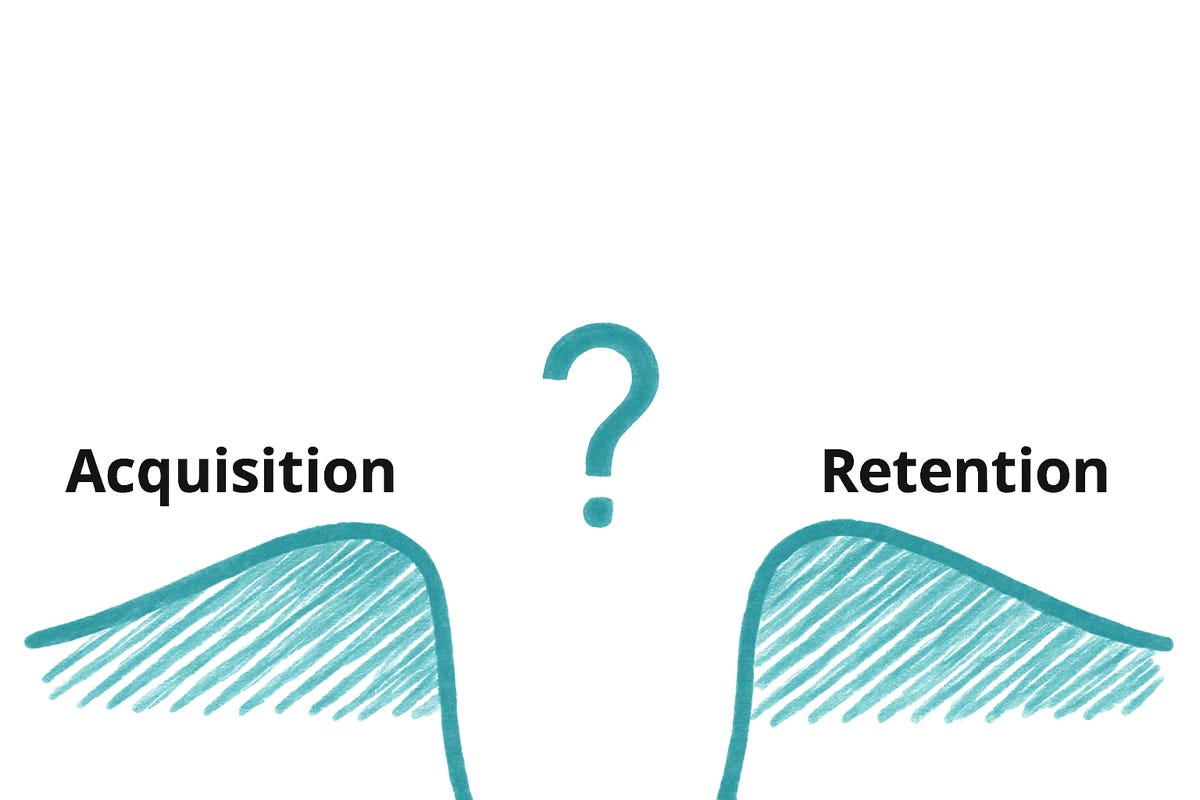
What is that bridge? My pitch is: It’s activation. For the last 10 years I’ve worked within the sponsorship model of nonprofit marketing and fundraising. Sponsorship involves donors giving monthly to directly support interventions for a specific individual, community, or project. This model is exceptional at activating new donors.
Here’s how it works at a high level:
Donor commits to sponsor a particular intervention.
Donor is asked to write a letter to those impacted by their giving. Introduce themselves, say hi, share some encouragement and their desire to help.
This makes it personal and helps a donor clarify their desire to be involved, even for themselves.Donor receives a letter back, either from the program staff coordinating the intervention or from a direct beneficiary.
This makes the connection between gift and tangible impact. There are real people on the other end of this donation and the donor can see both the need and the potential to make a real difference.Donor is encouraged to write another personal message, and the cycle continues.
This creates a habit. It’s not ‘set it and forget it’, it’s active engagement with the cause and the impact of their giving on some sort of a regular cadence.
The donor that has been through this process end-to-end is activated. They’ve bought into a vision and experienced the ‘aha!’ moment that their giving will making a meaningful difference towards realizing that vision.
Here’s the downstream implication. In 6 or 12 months, when they’re reviewing their expenses, they see that monthly donation and don’t have to think ‘I wonder what this is actually doing, I might cut this.’ Instead, the thought is, ‘I got a letter last month thanking me for my latest donation from someone who’s actually working on the project, I know what it’s being used for, I would feel sad about cutting this from my budget.’ That activation moment leads to real retention and lifetime value impact.
What about charities who don’t have a program model where this type of 1:1, personal-message-driven activation journey is possible? Let’s break the example down into its core components to see how we might build a similar experience. To do this, I’ll borrow from some of the excellent thinking around Activation that has developed in the tech sector (the masters of recurring revenue businesses), and specifically B2B growth leader Elena Verna. If you’re at all interested in recurring revenue growth strategy, subscribe to her newsletter right away.
Elena’s definition and framework are really useful:
Activation = Taking a user (or customer or donor) from signing up to establishing a habit around your core value proposition.
This process consists of three steps: Setup, aha, and habit loop.
Looking back at my previous example:
Setup: The donor creates an account and sends a first gift and message to the project they’re supporting.
Aha: They receive a letter back that connects them to the brand’s value proposition and proves the impact they’re making through their giving.
Habit loop: The donor writes another letter and expects the same value.
For nonprofits struggling to know where to start in creating an experience that takes one-time donors to monthly donors, I’d encourage some ideation around the steps above that might be unique to your brand’s value proposition. Here are a few back-of-the-envelope sketches to illustrate the concept.
Activation using brand value:
For brands that are driven by something like transformational expertise (climate science charities are an example), access to a gated community of experts may bring value for activation. Here’s how it might work:
Setup: One-time donors are invited to attend an invite-only update given by a senior leader on technological advancements, program progress, and future vision for the organization.
Aha: Donor attends and personally connects to the brand’s value proposition.
Habit loop: Donor is sent and accepts an invitation to a series of upcoming progress and vision update events, already scheduled and committed, in exchange for a conversion to a monthly donation. This happens within two weeks of the initial session.
Activation using social value:
For brands that are driven by more peer-to-peer or social value, (think crowdfunding micro-finance loans), access to shareable resources and a community-driven experience might create activation.
Setup: Donor gives a one-time gift to a micro-finance project. They receive an impact update as well as a social sharing kit to ask for funding help in their community.
Aha: Donor shares the project and sees several members of their community give as well. They feel the satisfaction of completing the project and also enjoy being perceived as a philanthropist by their community.
Habit loop: The donor is asked to choose between a series of similar projects as a next funding target and they commit to one.
Activation using segmentation:
For brands that have a major gifts team, an activation moment can look like a quick move to a major donor portfolio:
Setup: One-time donor makes an initial gift and data is enriched to understand this new donor’s giving capacity. The donor is identified as high net worth and is routed to the portfolio of a major gifts officer rather than being placed on a standard mass donor journey.
Aha: The donor connects 1:1 with a gifts officer for personalized thanks. They learn about the program vision and the impact of their giving from an individual and get to ask questions.
Habit loop: The gift officer invites the donor to connect for a next conversation. It’s on the calendar and committed. This re-engagement builds a relationship and a custom understanding of the donor’s giving strategy that can be leveraged to align future asks to the individual donor’s unique vision and capacity.
The key in all of these examples is to align the activation experience to the brand’s value proposition both for the cause and the needs of the donor. No two activation experiences will be the same, but the basic building blocks can be: Setup, aha, habit loop.
It’s important to notice that the activation moment is tightly time-bound: We’re not talking months and years here, we’re talking days and weeks. That’s when the emotional connection that led to the first gift is fresh and memorable. It’s a lot harder to activate a donor that has been sitting for 3 months with no activity. Their memory of the initial giving experience is stale.
Activation is also measurable: Did they receive a letter or didn’t they? Did they attend a vision update or didn’t they? Did they connect with a gift officer or didn’t they? It’s not a retention strategy that stretches over months, it’s a checkbox.
Another way to identify the activation moment might be to ask: What is the single most important thing a donor could do in the weeks after completing a first gift that would predict that they’ll give again?
It could be simple: Receive a thank-you phone call. Get them to log in to view their giving dashboard. It could be a more complex series of steps. Teams building this moment from scratch will need to test several ideas to determine what an effective activation looks like. The determination of success should be based in actual data: We tried this activation experiment, we saw a 20% lift in recurring donations from this cohort within 6 weeks. From there, it becomes more straightforward to build experiences that drive new donors towards that activation point.
An important caveat here: Activation programs take resources to implement, so it’s important to design an experience that works both for the donor as well as for the organization to create true sustainability. If the strategy requires 1:1 personalization by a staffer for each new donor, that’s not going to scale. But if a valuable experience can be delivered ‘on repeat’, being technology-driven and productized, that’s where sustainable growth starts to appear.
With major revenue sources like grants under strain, building individual donor programs offers a real opportunity to create funding stability. The key will be to innovate to produce sticky, habit-forming donation products and experiences that keep donors engaged and excited, regardless of giving level. A good activation experience is foundational.